
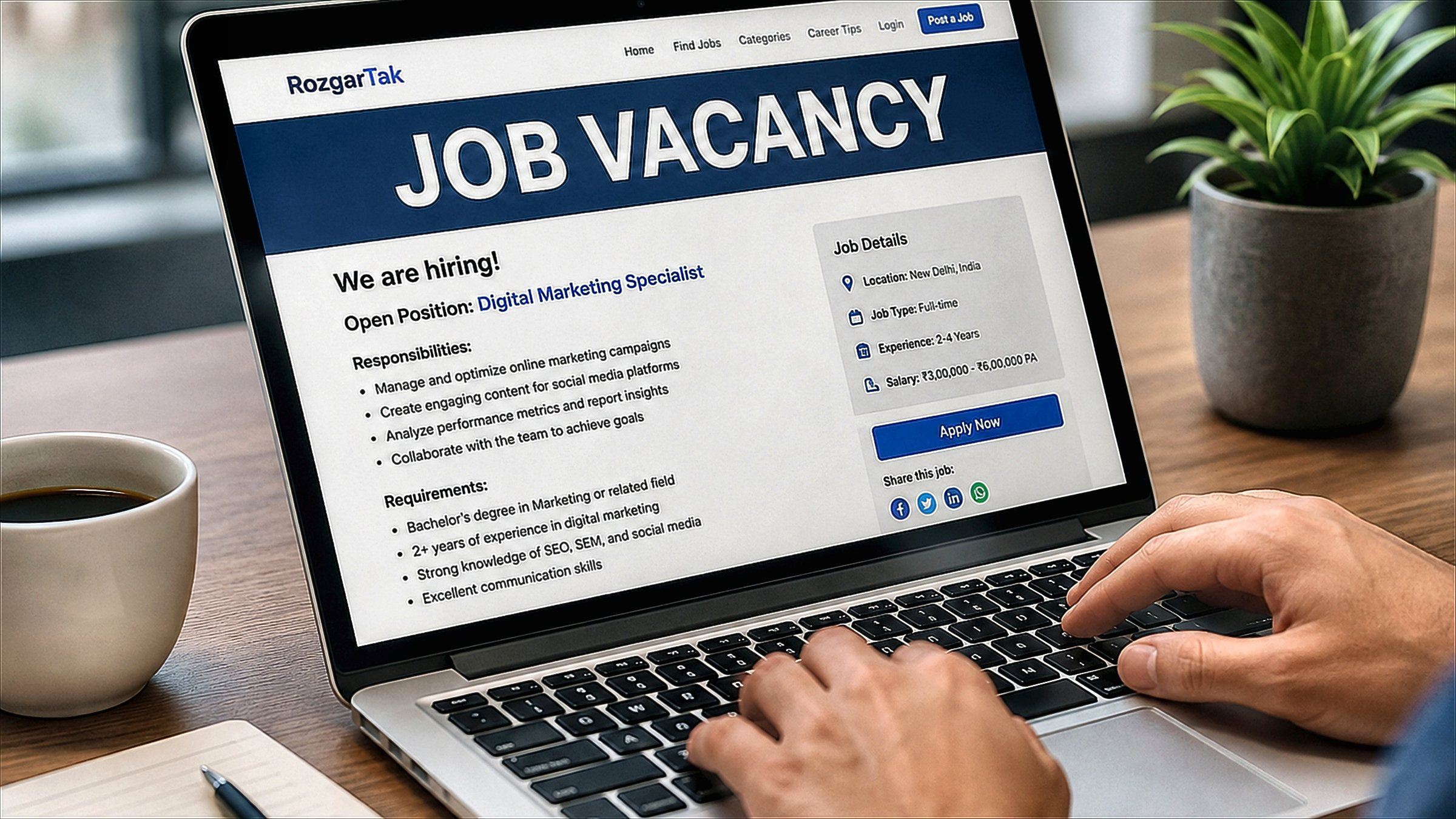
A job description is not just a list of skills copied into a vacancy page. It tells you what the employer needs, what they are likely to test, and which parts of your background should appear near the top of your application. Reading it carefully can save you from spending an hour tailoring a resume for a role that was never a good fit.

Start with the job title and the opening summary
Check the title, team, location, work arrangement, and short description first. A role called “Business Analyst” can mean very different things depending on the company. The first few lines often reveal whether the position is focused on reporting, client work, product operations, technology, sales support, or something else.
Match the role to the work, not only the title
Look at the responsibilities before deciding that the role fits. If most of the work is account management and the title happens to include “analyst,” your application should not be built around analytics alone.
Separate must-haves from nice-to-haves
Required qualifications usually describe the baseline needed to perform the job. Preferred skills are useful additions. Do not automatically reject yourself because you lack every preferred item. Instead, check whether you can demonstrate the role’s core work through adjacent experience.
Look for requirements that repeat
If Excel appears in the skills section, the responsibilities, and the “what you will do” section, it probably matters. The same is true for customer communication, SQL, sales tools, reporting, or project coordination. Repetition is often a stronger signal than the order of the bullet points.
Read the responsibilities as interview clues
Each responsibility can become a question later. “Prepare weekly reports” may turn into a question about data accuracy. “Work with stakeholders” may lead to a question about disagreement or changing requirements. Mark the responsibilities you can prove with an example and prepare a story for each major area.
Circle the first 90-day work
Words such as “manage,” “own,” “support,” “analyse,” “build,” and “coordinate” describe the work the team expects. Turn those verbs into a simple list and ask yourself: what would I need to do in my first month to handle this job well?
Check the practical details before applying
- Location or remote rules
- Shift timings and travel requirements
- Employment type
- Experience range
- Application deadline
- Salary information, when provided
- Required certificates or work authorisation
These details are easy to skip because the skill list looks more interesting. They can also be the difference between a useful application and a wasted one.
Use the posting to tailor your resume
Move relevant evidence higher
Your resume does not need a new identity for every vacancy. It needs the right evidence near the top. If the role repeatedly asks for customer issue handling, put the strongest customer-support result where the recruiter will see it quickly.
Use the employer’s language carefully
Using the same legitimate terminology as the job posting can help a recruiter understand the match. Do not copy whole sentences or add tools you have never used. Match language only where it truthfully describes your experience.
Watch for warning signs
Be careful when the role promises unusually high pay for little experience, gives vague responsibilities, asks for payment, or pushes you toward an unfamiliar application link with no clear employer identity. A professional-looking vacancy page can still be misleading, so verify the employer separately when something feels off.
Conclusion
Read a job description as a map of the job, not as a wall of keywords. Start with the actual work, find the requirements that repeat, note the practical conditions, and turn the responsibilities into evidence you can show on your resume and discuss in an interview. That approach makes your applications more selective and much easier to prepare.
Frequently Asked Questions
What should I look for first in a job description?
Start with the title, summary, responsibilities, must-have requirements, work arrangement, and application process. These usually tell you whether the role is a real fit.
What is the difference between required and preferred skills?
Required skills are presented as essential for the role, while preferred skills are desirable extras that may improve your chances but are not always mandatory.
How do I know which job requirements matter most?
Prioritise requirements that appear repeatedly, directly support core responsibilities, or are clearly tied to day-one performance.
Should I apply if I do not meet every requirement?
Yes, when you meet the core requirements and can show relevant evidence. Employers often list a broader wish list than the final shortlist requires.
What job posting red flags should I watch for?
Be cautious about vague responsibilities, unrealistic pay promises, payment requests, suspicious links, and requests for sensitive information before basic employer verification.

Article Reviewed by Vikram Singh
Senior Career & Recruitment Analyst at Rozgar Tak. Dedicated to sharing verified career roadmaps, exam notifications, and tech job industry insights.
